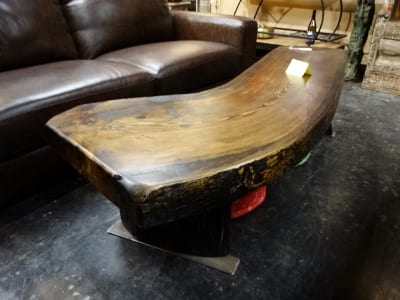
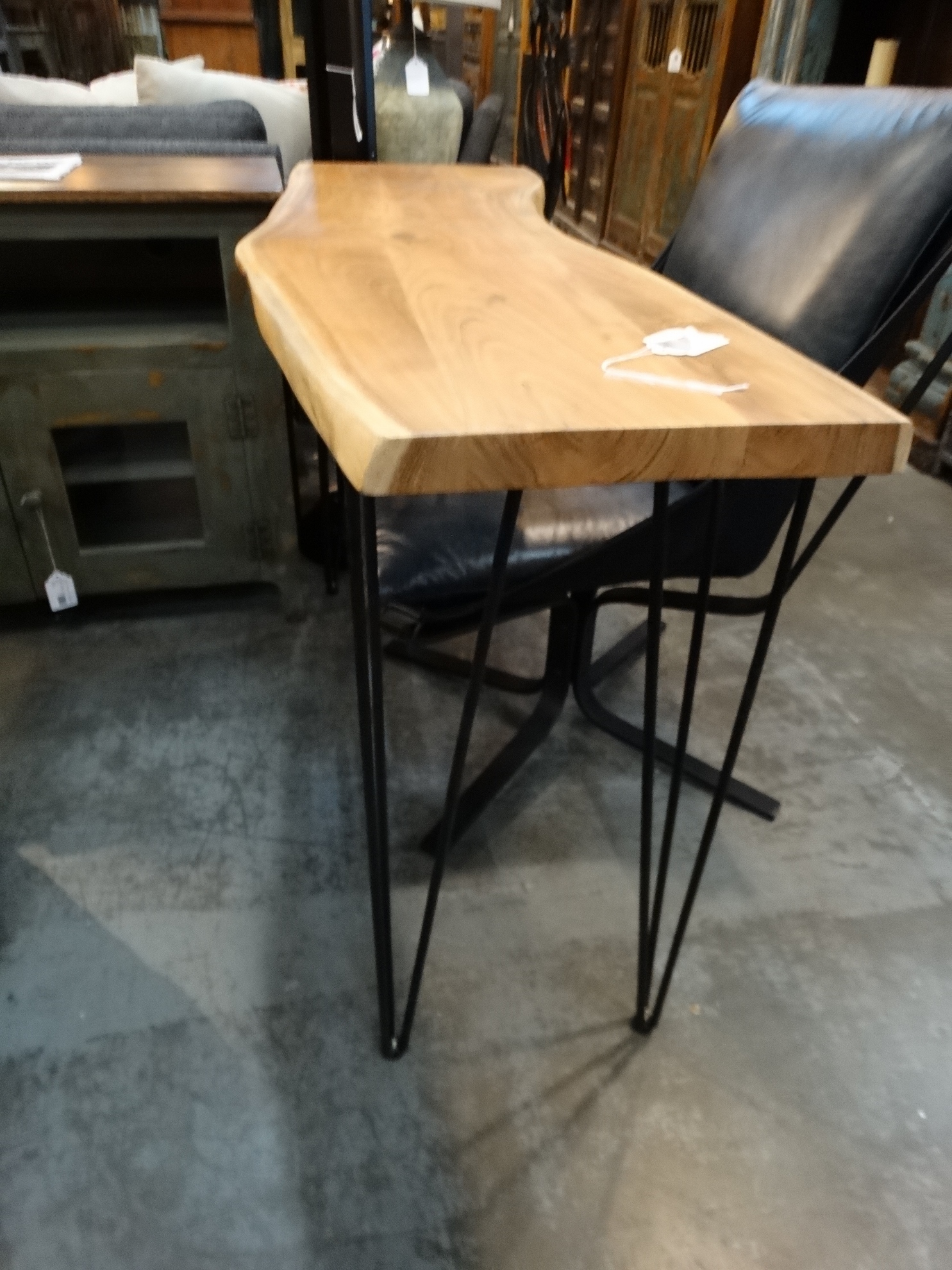
Live edge furniture preserves the natural boundary of the tree. The edge isn’t cut straight — it follows the profile of the trunk or branch as it actually grew. No two pieces are the same because no two trees are the same.
The live-edge work here comes primarily from Thailand and Costa Rica, where Tony has direct relationships with sawmills that work with old-growth and naturally fallen timber. Monkey pod is the primary species in the Thai sourcing — a dense, dark hardwood with grain patterns that move in wide curves across the face of a slab. Guanacaste and other tropical hardwoods come from the Costa Rica sourcing.
Live-edge slabs for dining tables typically run 36–48 inches wide and 84–96 inches long, though the dimensions vary because the tree set the dimensions, not a factory. Thickness on the Rare Finds pieces runs 2–4 inches, which is heavier than most live-edge furniture you’ll find elsewhere.
Care for live-edge pieces is minimal — food-safe oil once or twice a year for dining surfaces, and keeping them away from direct heating vents that cause cracking. Come in to see what’s currently on the floor.